Friday, January 17, 2025

Susan Sontag on Storytelling, What It Means to Be a Good Human Being, and Her Advice to Writers

 A substantial article on The MarginalianSusan Sontag on Storytelling, What It Means to Be a Good Human Being, and Her Advice to Writers

"With the disclaimer that “descriptions mean nothing without examples,” Sontag points to Gordimer as the “living writer who exemplifies all that a writer can be” and considers what the South African author’s “large, ravishingly eloquent, and extremely varied body of work” reveals about the key to all great writing:

    A great writer of fiction both creates — through acts of imagination, through language that feels inevitable, through vivid forms — a new world, a world that is unique, individual; and responds to a world, the world the writer shares with other people but is unknown or mis-known by still more people, confined in their worlds: call that history, society, what you will."

Monday, July 15, 2024

The Man He Killed

 
The Man He Killed


By Thomas Hardy


"Had he and I but met
            By some old ancient inn,
We should have sat us down to wet
            Right many a nipperkin!

            "But ranged as infantry,
            And staring face to face,
I shot at him as he at me,
            And killed him in his place.

            "I shot him dead because —
            Because he was my foe,
Just so: my foe of course he was;
            That's clear enough; although

            "He thought he'd 'list, perhaps,
            Off-hand like — just as I —
Was out of work — had sold his traps —
            No other reason why.

            "Yes; quaint and curious war is!
            You shoot a fellow down
You'd treat if met where any bar is,
            Or help to half-a-crown."


Wednesday, July 10, 2024

Éirinn & Iran go Brách

 Éirinn & Iran go Brách


By: Dr. Mansour Bonakdarian 


"This book analyzes particular patterns of nationalist self-configuration and nationalist uses of memory, counter-memory, and historical amnesia in Ireland from roughly around the time of the emergence of a broad-based non-sectarian Irish nationalist platform in the late eighteenth century (the Society of United Irishmen) until Ireland’s partition and the founding of the Irish Free State in 1922. In approaching Irish nationalism through the particular historical lens of “Iran,” this book underscores the fact that Irish nationalism during this period (and even earlier) always utilized a historical paradigm that grounded Anglo-Irish encounters and Irish nationalism in the broader world history, a process that I term “worlding of Ireland.” In effect, Irish nationalism was always politically and culturally cosmopolitan in outlook in some formulations, even in the case of many nationalists who resorted to insular and narrowly defined exclusionary ethnic and/or religious formulations of the Irish “nation.” Irish nationalists, as nationalists in many other parts of the world, recurrently imagined their own history either in contrast to or as reflected in, the histories of peoples and lands elsewhere, even while claiming the historical uniqueness of the Irish experience. Present in a wide range of Irish nationalist political, cultural, and historical utterances were assertions of past and/or present affinities with other peoples and lands."


It’s a privilege to read Dr. Bonakdarian’s new book:


Éirinn & Iran go Brách: Iran in Irish-nationalist historical, literary, cultural, and political imaginations from the late 18th century to 1921


“Mansour Bonakdarian offers a sustained, meticulously researched comparative history on Irish-Iranian entanglements spanning the long nineteenth century. Moving from the initial conduit of romantic orientalism toward a colonial lens on Imperial British world politics, it is a very welcome addition to the fields of Irish studies, nationalism studies, and comparative history.” ― Joep Leerssen, Emeritus Professor, Universities of Amsterdam and Maastricht

Bride of Acacias and Six Silent Men at Chicago Dramatists

A staged reading of Bride of Acacias and Six Silent Men at Chicago Dramatists


By CD Resident Playwright Ezzat Goushegir


Directed by Arti Ishak

Actors:
Maryam Abdi
Alex Attea
Musa Ghaznavi
Jelani Julius
Nate Vangine
Bob Jenkins
Kian Adel 

ABOUT THE PLAY:
Set in 1950s Iran and Europe, a rebellious female poet, seeking freedom and independence, strives to create a sense of self. Six puzzled, silent men, in search of their own identities, observe her as she enacts her life.


MEET THE PLAYWRIGHT:
Ezzat Goushegir is a bilingual playwright, poet, diarist, and fiction writer, whose works have been staged and published internationally, including fourteen books in Farsi. Her plays in English have been translated into different languages and produced by theater companies in the U.S., Europe, China, the Philippines, and received awards. Her latest play “My Name is Inanna” was premiered in China in 2012 and staged by Red Tape Theatre in Chicago in 2021.


MEET THE DIRECTOR:
Arti Ishak (they/them) is an actor, director and writer. Acting credits include theatres like The Second City, Haven, Circle, Writers, American Theater Company. TV: Southside (HBO); Dark Matter (Apple TV); Chicago Med (NBC). Directing credits: Shukran Bas (Means of Productions), ba la (HF Productions), Same Sects (Haven Chicago), Hatefuck (First Floor Theatre). Arti is staff with The Chicago Inclusion Project, an instructor at Black Box Acting & Depaul University. They’re represented by Paonessa Talent Agency www.artiishak.com


Tuesday, May 21, 2024

Three Guineas

Three Guineas

 Three Guineas is a book-length essay by Virginia Woolf, published in June 1938. 

Three Guineas: The Virginia Woolf Library Authorized Edition

The entire essay is structured as a response to an educated gentleman who has written a letter asking Woolf to join his efforts to help prevent war. War was looming in 1936–7 and the question was particularly pressing to Woolf, a committed pacifist.[2] In the gentleman's letter (he is never named), he asks Woolf her opinion about how best to prevent war and offers some practical steps. Woolf opens her response by stating first, and with some slight hyperbole, that this is "a remarkable letter—a letter perhaps unique in the history of human correspondence, since when before has an educated man asked a woman how in her opinion war can be prevented."


Drawn from life: why have novelists stopped making things up?

 Drawn from life: why have novelists stopped making things up?

....

"Where does this leave invention? The question of its meaning and value seems to grip the current tranche of autofictioneers, keen to probe the hierarchies and hypocrisies that impose themselves on writing. Long have aspiring fiction writers been told to write what they know, only to find themselves criticised for lacking imagination. In other words, give voice to your subjectivity but avoid narcissism; make it up, or we’ll think you can’t. Tell the truth, or we’ll think you’re a liar."

....

"To write autofiction, however, requires a willingness to treat oneself as the central character, a countercultural celebrity, and this is probably what has sparked resistance to it. It requires ego, it demands the bold determination to make a mark. In the case of Cusk, that started some time ago, when she wrote about motherhood and divorce in A Life’s Work and Aftermath and faced a censure that declared itself on behalf of the unknown others – the children, the husband – in her story. It seemed a convenient moment for such scruples to arise in a culture otherwise fairly used to the blithe incorporation of others’ lives, and it brought to mind Virginia Woolf’s imagined objections of those who would thwart female creativity in Three Guineas:

    But to sell a brain is worse than to sell a body, for when the body seller has sold her momentary pleasure she takes good care that the matter shall end there. But when a brain seller has sold her brain, its anaemic, vicious and diseased progeny are let loose upon the world to infect and corrupt and sow the seeds of disease in others. Thus we are asking you, Madam, to pledge yourself not to commit adultery of the brain because it is a much more serious offence than the other.


Saturday, May 18, 2024

History of Mother’s Day as a Day of Peace: Julia Ward Howe

 History of Mother’s Day as a Day of Peace: Julia Ward Howe

While Mother’s Day has presently lost much of its early edge for justice, it’s important to note some of the underpinning intentions and re-commit ourselves to its prescient calling. At a time when our country is again engaged in devastating and costly wars abroad and many of our own communities are torn apart by violence, it’s time for Mother’s Day to return to its roots.

In the spirit of Ward Howe’s original call, this occasion can be a time to dedicate ourselves, on behalf of mothers, fathers, sisters and brothers everywhere, to rise up and protect our most vulnerable by calling for our leaders to make a directional shift in the course of our nation. There is no need more urgent than addressing the devastation brought on by violence in all of its forms – affecting the lives of untold millions in our nation and around the world. Then, we may finally see the carnage and devastation of violence and war fade into its own history. There could of course be no better way to honor our mothers.
MOTHER’S DAY PROCLAMATION
Boston, 1870

“Arise, then… women of this day!
Arise, all women who have hearts,
whether our baptism be that of water or of tears!
Say firmly:
We will not have great questions decided by irrelevant agencies.
Our husbands shall not come to us, reeking with carnage,
for caresses and applause.
Our sons shall not be taken from us to unlearn
all that we have been able to teach them of charity, mercy and patience.
We, women of one country, will be too tender of those of another country
to allow our sons to be trained to injure theirs.

From the bosom of the devastated earth a voice goes up with our own.
It says:  Disarm, Disarm!
The sword of murder is not the balance of justice.
Blood does not wipe out dishonor,
nor violence vindicate possession.
As men have often forsaken the plough and the anvil
at the summons of war,
let women now leave all that may be left of home
for a great and earnest day of council.

Let them meet first, as women, to bewail and commemorate the dead.
Let them then solemnly take council with each other as to the means
whereby the great human family can live in peace,
each bearing after his own kind the sacred impress, not of Caesar,
but of God.

In the name of womanhood and of humanity, I earnestly ask
that a general congress of women, without limit of nationality,
may be appointed and held at some place deemed most convenient,
and at the earliest period consistent with its objects,
to promote the alliance of the different nationalities,
the amicable settlement of international questions,
the great and general interests of peace.“

Wednesday, May 15, 2024

Chicago Dramatists Celebrates Studs Terkel

This Friday and Saturday at Chicago Dramatists!
 

Back to the Studs:
 

A Celebration of Mark Larson’s New Book!
Please join us at 7pm on May 17th & 18th for two evenings of
performances, roundtable and salon conversation, book-signing, and live
music, all in celebration of Mark Larson’s newest publication!


Meet the Roundtable Panelists:

Mark Larson - Author of Working in the 21st Century
Carson Becker - Artistic Director, Chicago Dramatists
Friday only:
Natalie Y. Moore - 91.5 WBEZ
Kerry Reid - Chicago Reader
Jamie O’Reilly - Singer, Producer, Activist
Rev. Erik Christensen - Lutheran School of Theology


Saturday only:
Holly Mulcahy - Wichita Symphony
Trung Lê - Epic Decade
Marilyn Halperin - Chicago Shakespeare Company


All  proceeds will help fund Chicago Dramatists’ mission to nurture and grow  the next generation of new American plays, and to support and uplift playwrights at all levels of their careers. Purchase your tickets at the link in our bio!

May be an image of 9 people and text that says 'BACK ΤΟ THE STUDS Friday Saturday BothDays Both Panelists'


Tuesday, April 9, 2024

Eclipse

A poem by Emily Dickinson:

If He dissolve—then—there is nothing—more—
Eclipse—at Midnight—
It was dark—before—
Sunset—at Easter—
Blindness—on the Dawn—
Faint Star of Bethlehem—
Gone down! 

Read more 

My book: The Eclipse


Thursday, April 4, 2024

The Philosophy of Silence

 The Philosophy of Silence: Charles E. Scott's 'Telling Silence' (Nietzsche, Foucault, and Poeisis)

https://www.youtube.com/watch?v=ktB8gNR74UI

 Why Silence is Power?

Thursday, September 14, 2023

Why Is Music Getting Sadder?

 Why Is Music Getting Sadder?

By: Ted Gioia

Songs are a cultural indicator—so what are they telling us right now? 

A good read....

Tuesday, June 6, 2023

Deep Time: The Tyranny of Time

 Deep Time: The Tyranny of Time

 To The Best Of Our Knowledge:

 When you're on the clock, you're always running out of time – because in our culture, time is money. The relentless countdown is making us and the planet sick. But clock time isn't the only kind. There are older, deeper rhythms of time that sustain life. What would it be like to live more in tune with nature's clocks? **Deep Time is a series all about the natural ecologies of time from To The Best Of Our Knowledge and the Center for Humans and Nature. We'll explore life beyond the clock, develop habits of "timefulness" and learn how to live with greater awareness of the many types of time in our lives. Original Air Date: June 03, 2023 Interviews In This Hour: How time came to rule our lives — and how we might free ourselves — The past and future of keeping time Guests: Jenny Odell, David Rooney Never want to miss an episode? Subscribe to the podcast. Want to hear more from us, including extended interviews and favorites from the archive? Subscribe to our newsletter.

Sunday, September 11, 2022

A Poem on Healing

 A short version of my poem: “Little Joan of Arc with Red Lipstick, Pink Nail Polish and Orange Dress” is published on 10th Ward Lit, Healing issue.

Tuesday, August 23, 2022

A Trip to Italy

 A Trip to Italy is a new film video by Kian A. Adel, a 17 year old talented filmmaker. He gives a different perspective to a traveling experience. 


Tuesday, July 19, 2022

Today

Kian A. Adel, a 17 year old filmmaker, made this film based on one of my poems "Today". He also acted in it.
 
Camera: Amelia Winter

 
Kian Adel is a great talent!

Sunday, July 17, 2022

When the Written Word Works - Bob Jenkins

 When the Written Word Works - 

By: Bob Jenkins 

"Speech is the tug of war that pulls us together. Against all odds, the often-ill-defined thoughts of one person are refined and understood by another. Those talking are together sharing context. Perhaps sharing family and home. Gestures and looks confirm understanding and misunderstanding. Questions, requests for clarification, and repeating what was heard perfect the communication. It mostly works whenever the speakers are face to face, in synchrony, committed to the goal of communicating. By contrast letters, memos, emails, texts are far less likely to succeed. Not surprising as they are asynchronous."

Read more....  


Tuesday, April 26, 2022

Mr. Thank You

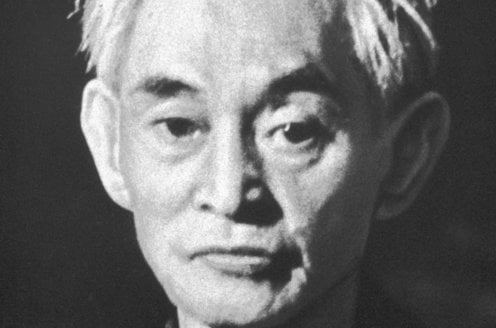
 Mr. Thank You, a short story by Yasunari Kawabata

A film version is made by  Hiroshi Shimizu

A bus driver, nicknamed Mr. Thank You due to his expressions of gratitude to other road users who give way on the narrow mountain roads, drives from rural Izu to faraway Tokyo. The film portrays the passengers and their diverse reasons for travel, like a mother and her daughter who is destined to be sold in Tokyo, and the people they meet on the way, including a Korean working woman who makes funeral arrangements for her deceased father. In the end, Mr. Thank You marries the daughter to save her from her fate.  

Here is a film review.

And.... a 3 minute of the film....

"The Pomegranate," by Kawabata Yasunari

Kawabata Yasunari (1889-1972) was the first Japanese writer to win the Nobel Prize in literature. It was awarded in 1968, and coincided with the centennial celebration of the Meiji Restoration.

Japanese authors of the modern period have been well aware of both their own long, rich literary tradition and new ideas about content, form, and style available from the West. Kawabata was no exception; his work has been influenced by both traditions, and is widely read in the West as well as in Japan.

Kawabata is best known in the United States for novels such as Snow Country, A Thousand Cranes, and The Sound of the Mountain, but he also wrote many very short stories — a form he called tanagokoro no shôsetsu ( "palm-of-the-hand stories"). These short narratives are less concerned with plot, or story line, than with depicting momentary experiences and feelings that have wider meanings.

Read the short short story:

"The Pomegranate"  

 Yasunari Kawabata – Biographical - NobelPrize.org

Wednesday, April 20, 2022

مستند کوهدشت جامال کاری از بهمن ابراهیمی


این مستند در سی و هفت دقیقه پیرامون جاذبه های طبیعی و تاریخی کوهدشت لرستان توسط بهمن ابراهیمی تهیه شده است.

Monday, April 4, 2022

مكرزنان


مكر-زنان

آورده اندكه مردي بودپيوسته تفتيش مكرزنان ميكردواومردي فاضل ودانشمندوجامع علوم بودهميشه احتياطازمكرزنان كرده وايشان رامحل اعتمادندانستي واعتمادبرقول ايشان ننمودي وگفتي زن چه وجودداردكه مكرش چه باشدوزنان ناقص عقلندوكتابي تمام كرده بودازمكرزنان وآنرا" حيله النساء"نام كرده بودهركجاازمكرزنان ديده ياشنيده بوددرآن كتاب جمع كرده وهميشه درجستجوي حيله زنان بودتاوقتيكه دراثناي سفربقبيله بني اسد رسيدوچون شب بودنزديك آن قبيله فرودآمدوبردرخانه يكي ازآنهارفت كه صاحب خانه درخانه نبودناگاه ازآنخانه زني بيرون آمددرغايت حسن وجمال و درنهايت غنج ودلال كه ازروي زيباي اوخورشيدرشك ميبردآن زن ديدجواني غريب بردرخانه اوفرودآمده پيش رفت وسلام كردآنمردجواب سلام اورابازداد مرحباگفت وچون زن رامثال گل شكفته ديدگفت ايزن مهمان دوست داري .

داستانی از مکر زنان

گویند نویسنده ای تصمیم گرفت داستانی در مورد مکر زنان بنویسد

وآنرا حلیه النساء نام گذارد . برای جمع آوری مطالب شروع به سیاحت وگردش در شهرها کرد واز هر مسافرتی مطلبی فراهم آورد.

 در دهکده «دوالاهیه - Devalahia» شاه‌زاده‌ای به نام «راجه سینهه - Raga sinha» می‌زیست. زنی داشت بسیار نام‌آور، اما بداخلاق و تند خشم.
روزی زن با شوهرش سخت مشاجره کرد و نتیجه آن شد که از خانه شوهر دل برکند و دو پسر خود را برداشت و به سوی خانه پدر خویش راه افتاد. از چندین دهکده و شهر گذشت و عاقبت به جنگل انبوهی رسید. نزدیکی‌های «مالایه». و در آن جنگل ببری دید. ببر هم او را دید. و دم جنبان به سوی او آمد. زن نخست ترسید. اما برفور رفتاری چون دلاوران به خود گرفت و چند بار پشت دست پسرها زد که:
«چرا بر سر خوردن این ببر با هم مشاجره می‌کنید؟ فعلاَ همین یکی را دو نفری بخورید، بعد یکی دیگر پیدا خواهیم کرد.»
ببر که این سخنان را شنید، با خود اندیشید که این زن حتماَ زنی دلاور است و از سر وحشت پا به دو گذاشت و گریخت.
در چنین حالی، شغالی، ببر را دید و گفت:
«عجب ببری که دارد از ترس می‌گریزد!»
ببر گفت: